1. G20 Foreign Ministers Conclude Atlanta Meeting Without Consensus on Major Global Issues
31 October 2026 | Atlanta, United States
Foreign ministers from the Group of Twenty (G20) concluded a two-day meeting in Atlanta on 31 October without reaching consensus on several major international issues. The meeting, hosted under the United States’ G20 presidency, ended with a chair’s statement rather than a jointly agreed communiqué.
Discussions covered energy security, global supply-chain resilience, international trade and geopolitical tensions. According to diplomatic reporting, disagreements over the Russia–Ukraine conflict, developments in the Middle East and international trade restrictions contributed to the absence of a consensus statement.
Despite these differences, ministers discussed practical areas of economic cooperation, including critical mineral supplies, investment conditions and the security of international maritime transportation. The chair’s statement highlighted the importance of affordable energy, resilient supply chains and uninterrupted navigation through strategic waterways, including the Strait of Hormuz and Bab al-Mandab.
US Secretary of State Marco Rubio acknowledged the disagreements while emphasising opportunities for cooperation on shared economic challenges. The meeting also served as preparation for the G20 Leaders’ Summit scheduled for November in Florida.
The outcome reflects continuing divisions among major powers on geopolitical issues. Nevertheless, the G20 remains an important platform for international dialogue and economic cooperation, even when disagreements prevent collective decisions.
2. Quad Foreign Ministers Strengthen Cooperation on Critical Minerals, Semiconductors and AI
31 October 2026 | Atlanta, United States
Foreign ministers from the United States, India, Japan and Australia met in Atlanta on 31 October, reaffirming their commitment to a free and open Indo-Pacific and announcing further cooperation on economic security, critical minerals and advanced technologies.
The meeting brought together US Secretary of State Marco Rubio, Indian External Affairs Minister S. Jaishankar, Japanese Foreign Minister Toshimitsu Motegi and Australian Foreign Minister Penny Wong.
In their joint statement, the ministers expressed concern over economic coercion, arbitrary export restrictions and non-market practices affecting global supply chains. Although China was not explicitly named, the discussions took place amid growing competition over critical minerals and advanced technologies.
The four countries agreed to strengthen cooperation under the Quad Critical Minerals Initiative, including investment in recycling facilities and mineral-processing infrastructure. The United States committed $10 million to support critical mineral recovery facilities in India and ASEAN countries.
The Quad also announced plans to provide more than $85 million in technical and financial assistance to expand access to trusted advanced artificial intelligence technologies across the Indo-Pacific. The official statement used the term Super Intelligence, which Australia, India and Japan identified as referring to artificial intelligence.
Ministers additionally emphasised semiconductor supply-chain resilience, energy security and freedom of navigation.
The meeting demonstrates the Quad’s expanding economic and technological agenda. Cooperation on critical minerals, semiconductors and AI is becoming an increasingly important component of Indo-Pacific strategic relations.
3. Anthropic Files for IPO, Disclosing Rapid AI Revenue Growth and Substantial Financial Costs
26 October 2026 | United States
Artificial intelligence company Anthropic filed a registration statement with the US Securities and Exchange Commission (SEC) on 26 October, formally beginning the process towards a potential initial public offering (IPO).
The company, known for developing the Claude family of AI models, disclosed rapid revenue growth alongside substantial financial commitments associated with developing and operating advanced AI systems.
According to its filing, Anthropic reported adjusted operating income of approximately $1.62 billion during the first half of 2026. However, under standard accounting measures, the company recorded an operating loss of approximately $693 million and a net loss of around $80.7 billion, largely influenced by the accounting treatment of convertible debt rather than equivalent operating cash expenditure.
Anthropic also reported that its second-quarter revenue had increased by approximately 1,368% year-on-year, reflecting rapidly expanding commercial demand for AI services.
The company proposed listing on Nasdaq under the ticker symbol ANT, although the preliminary filing did not specify the final offering price or number of shares.
The filing comes as major technology companies continue investing heavily in data centres, advanced semiconductors and computing infrastructure to support increasingly capable AI systems.
Anthropic’s planned IPO reflects the growing commercial scale of the AI industry and its substantial financing requirements. The sustainability of AI investment will increasingly depend on whether commercial revenue can support continued expansion in computing infrastructure and research.
4. Binance Replenishes Most Assets Following Record $6.3 Billion Cryptocurrency Theft
31 October 2026 | International Digital Finance
Cryptocurrency exchange Binance announced on 31 October that it had replenished approximately 90% of the digital assets stolen in a major cyberattack earlier in the week.
On 29 October, hackers reportedly stole approximately $6.3 billion in cryptocurrency from Binance, making it the largest reported cryptocurrency theft on record. The attack disrupted withdrawals and prompted international efforts to trace and recover the stolen assets.
According to Binance, approximately $6 billion had been replenished using company funds and financial reserves. The remaining losses involved less-liquid digital assets that could take longer to replace.
The company stated that customers would not bear the financial losses. Binance also reported that it had located approximately $3 billion in affected assets and was working with blockchain companies and industry partners to freeze funds associated with the theft.
On 31 October, the US Federal Bureau of Investigation attributed the attack to TraderTraitor, a North Korean state-sponsored cyber group previously linked to major cryptocurrency thefts.
The FBI reported that the attackers were converting stolen assets into Ethereum and warned that further laundering could occur through decentralised financial services.
Binance continued working to restore normal operations and strengthen its security arrangements. Withdrawal services had been suspended following the incident, with reopening expected on 1 November.
The incident exposes significant cybersecurity vulnerabilities in digital financial infrastructure. It also highlights the importance of cooperation between financial institutions, technology companies and law-enforcement authorities in addressing cross-border financial crime.
5. Iran and Qatar Continue Negotiations as Strait of Hormuz Maritime Disruptions Persist
31 October 2026 | Doha, Qatar
Iranian representatives met Qatari mediators in Doha on 31 October as diplomatic efforts continued to reduce hostilities in the Gulf and restore maritime transportation through the Strait of Hormuz.
The meeting followed more than 12 hours of discussions between Iranian and Qatari officials in Tehran on 30 October. According to Reuters, the negotiations were coordinated through regular diplomatic contacts with Washington.
Qatar reportedly proposed a seven-day confidence-building arrangement intended to facilitate further negotiations. Iranian officials considered the proposal insufficient and presented their own conditions, including changes to sanctions, restrictions affecting Iranian ports and arrangements governing navigation through the Strait of Hormuz.
Iranian Foreign Minister Abbas Araghchi confirmed that Tehran was examining proposals presented through mediators but maintained that further progress depended on the United States accepting Iranian conditions.
US Secretary of State Marco Rubio stated on 31 October that President Donald Trump had not decided whether to launch further military strikes against Iran and preferred a diplomatic resolution.
Meanwhile, maritime security incidents continued. On 28 October, a projectile reportedly struck an outbound crude oil tanker in the Strait of Hormuz. Another vessel was struck near Iran’s Lavan Island on 30 October, causing a fire.
No comprehensive agreement had been reached by the end of the reporting period.
The renewed negotiations indicate continuing diplomatic efforts to reduce regional hostilities. However, disagreements over sanctions, security arrangements and maritime access remain unresolved, while shipping disruptions continue to affect the Gulf.
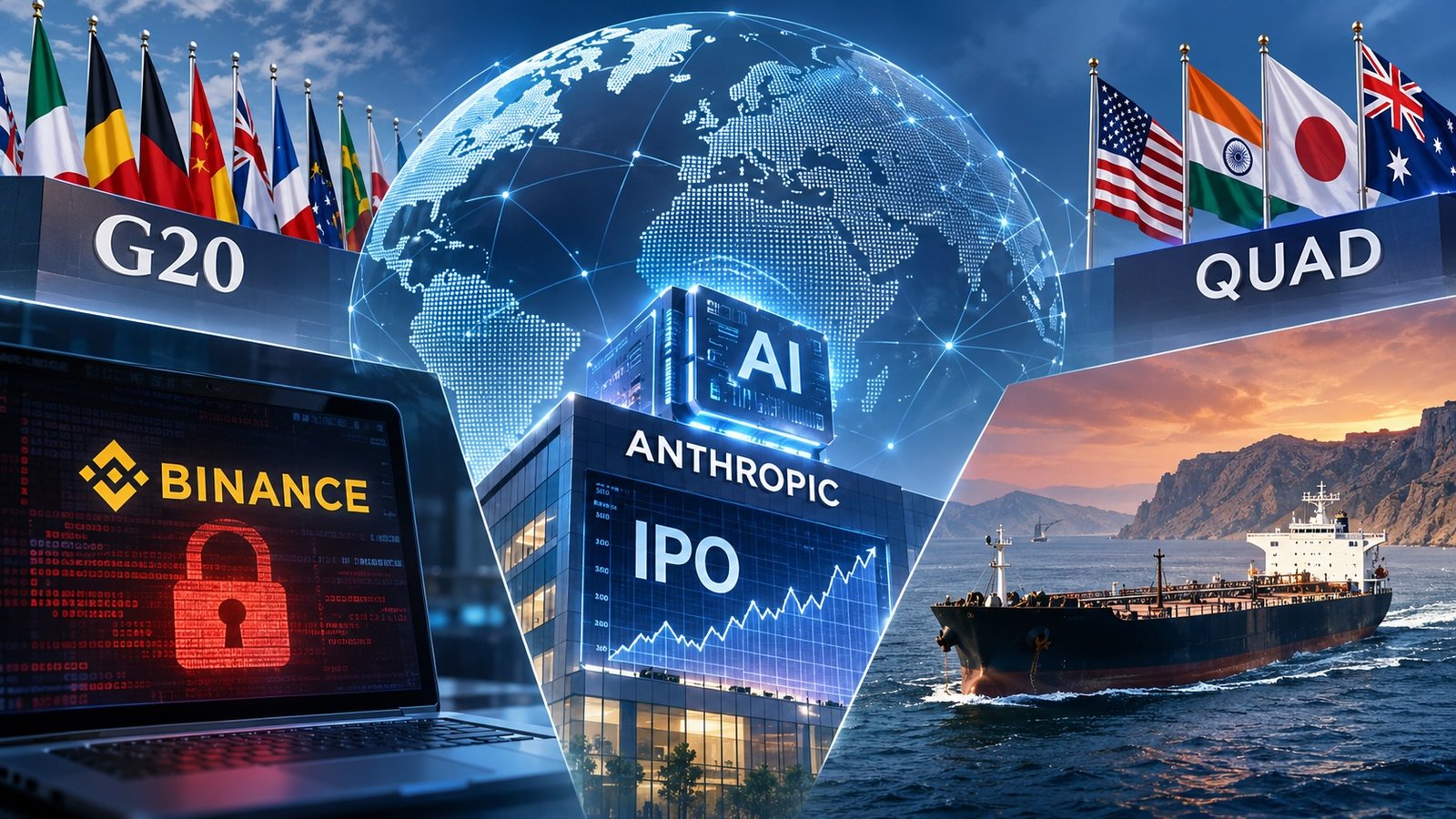
Cover image: AI-generated illustration.